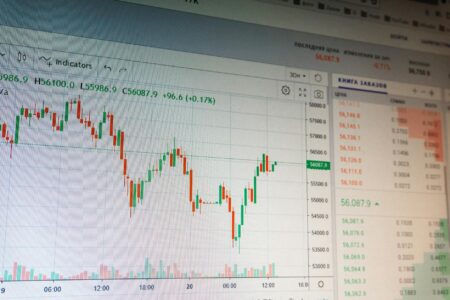





Market volatility has retirees scrambling for income strategies that deliver consistent returns without excessive risk. As traditional bonds offer meager yields and stock prices swing wildly, a decades-old options strategy is experiencing a renaissance among financial advisors catering to retirement portfolios.
Covered calls, once considered an advanced trading technique, are now becoming a mainstream tool for retirees seeking to generate additional income from their existing stock holdings. The strategy involves owning shares of a stock while simultaneously selling call options against those shares, collecting premium payments that provide immediate income regardless of stock price movements.
“We’re seeing unprecedented interest from clients aged 60 and above,” says Maria Rodriguez, a certified financial planner in Phoenix who manages over $200 million in retirement assets. “The covered call premiums are giving them the monthly income they need while they wait for their dividend stocks to recover from recent market turbulence.”

The Mechanics Behind the Income Stream
The covered call strategy works by allowing retirees to monetize the volatility in their stock portfolios. When an investor owns 100 shares of a company like Microsoft or Johnson & Johnson, they can sell call options against those shares, typically at strike prices 5-10% above the current stock price.
If the stock price remains below the strike price by expiration, the option expires worthless and the investor keeps the premium while retaining ownership of the shares. If the stock rises above the strike price, the shares get called away at a profit, but the investor misses out on additional upside gains.
Financial advisors report that retirees are particularly drawn to this strategy because it provides income in flat or declining markets. Unlike dividend payments that companies can cut during economic downturns, option premiums are received immediately upon selling the calls.
The strategy works especially well with large-cap dividend-paying stocks that retirees already own for income purposes. Technology giants like Apple and Microsoft, along with consumer staples such as Procter & Gamble and Coca-Cola, have become popular choices for covered call programs due to their relatively stable price movements and liquid options markets.
Risk Management in Uncertain Times
While covered calls provide immediate income, they also cap upside potential if stocks rally strongly. This trade-off has proven acceptable to many retirees who prioritize steady income over maximum capital appreciation.
“The key is education,” explains David Chen, a fee-only financial advisor in Seattle who has implemented covered call strategies for over 300 retirement clients. “Retirees need to understand they’re trading potential upside for guaranteed income. In today’s environment, many prefer the bird in the hand.”
Risk management becomes crucial when implementing covered calls during volatile periods. Advisors typically recommend writing calls with expiration dates between 30-45 days, allowing for multiple opportunities to collect premiums throughout the year. Strike prices are usually set 5-15% above current stock prices to provide a buffer against assignment while still generating meaningful premium income.

Some advisors are incorporating covered calls into broader income strategies that include dividend ETFs, which offer diversification benefits while maintaining the income focus that retirees require. The combination allows for premium collection on individual stock positions while maintaining exposure to dividend growth across multiple sectors.
The tax implications also favor retirees, as option premiums are typically taxed as short-term capital gains, but the income timing can be managed to optimize tax efficiency. Many retirees find themselves in lower tax brackets, making the immediate income from premiums more attractive than waiting for long-term capital gains that might not materialize for years.
Technology Platforms Democratize Access
The rise of sophisticated trading platforms has made covered call strategies more accessible to retail investors. Brokerages like Charles Schwab, Fidelity, and TD Ameritrade now offer automated covered call programs that handle the mechanics of option selection, execution, and rolling positions forward.
These platforms typically screen for optimal candidates based on factors like implied volatility, time to expiration, and strike price selection. The automation removes much of the complexity that previously required extensive options trading experience.
“Ten years ago, implementing a covered call strategy required significant time and expertise,” notes Jennifer Walsh, a portfolio manager who specializes in retirement income strategies. “Today’s technology platforms handle the heavy lifting, allowing advisors to focus on overall portfolio construction and client communication.”
Exchange-traded funds focused on covered call strategies have also gained traction. Funds like the JPMorgan Equity Premium Income ETF and the Global X NASDAQ 100 Covered Call ETF allow retirees to access professional covered call management without the need for individual stock selection or options trading knowledge.
These professionally managed alternatives typically generate monthly distributions, appealing to retirees who need predictable cash flow for living expenses. The funds also provide diversification benefits that individual covered call strategies cannot match.
Market Conditions Favor the Strategy
Current market conditions have created an unusually favorable environment for covered call strategies. Elevated implied volatility levels mean option premiums are higher than historical averages, providing more income per contract sold.
The combination of uncertain economic conditions, geopolitical tensions, and Federal Reserve policy changes has kept volatility elevated across most equity sectors. This environment typically translates to higher option premiums, making covered calls more attractive from an income perspective.
Interest rate volatility has also pushed some retirees away from traditional fixed-income investments toward equity-based income strategies. With bond prices fluctuating significantly as rates change, the relative stability of covered call income has become more appealing.

Market analysts expect continued volatility throughout the remainder of the year, driven by inflation concerns, corporate earnings uncertainty, and global economic pressures. This backdrop suggests that covered call strategies may continue to provide attractive risk-adjusted returns for income-focused investors.
The strategy’s popularity is likely to grow as more financial advisors become comfortable with options strategies and technology platforms continue to simplify implementation. Educational resources from major brokerages have also improved, making it easier for both advisors and clients to understand the risks and benefits.
As traditional income sources remain challenged by economic uncertainty, covered calls represent a practical solution for retirees seeking to maximize returns from existing equity holdings. The strategy’s combination of immediate income generation and downside protection aligns well with the risk tolerance and income needs of retirement portfolios navigating an increasingly complex financial landscape.
Frequently Asked Questions
What is a covered call strategy?
A covered call involves owning stock shares while selling call options against them to generate premium income.
Are covered calls suitable for retirement portfolios?
Yes, they can provide steady income and downside protection, though they limit upside potential during strong rallies.