





A Policy Shift With Consequences Beyond Washington
When Congress debates Medicaid work requirements, the conversation tends to center on federal spending projections and political philosophy. What gets less attention is what happens at ground level when those requirements take effect – the administrative machinery states must build, the populations most likely to lose coverage, and the downstream costs that land squarely on state budgets, rural hospitals, and local economies that were never built to absorb that kind of shock.
The current push to attach work, job training, or community service requirements to Medicaid eligibility is framed as a way to reduce federal healthcare spending and encourage self-sufficiency. But the fiscal mechanics are more complicated than that framing suggests. States that implement these requirements often spend more in the short term, not less – and the rural communities most dependent on Medicaid-supported care tend to bear a disproportionate share of the financial fallout.

The Administrative Cost Problem Nobody Talks About
Running a work requirement program is not free. States must build or expand eligibility verification systems, hire caseworkers to process monthly or quarterly compliance reports, and set up appeals processes for enrollees who dispute terminations. For states that already operate lean Medicaid agencies – which includes most states that have historically been enthusiastic about work requirements – these are not trivial line items. Arkansas, which briefly implemented work requirements in 2018 before a federal court blocked the program, saw its administrative costs spike during the rollout period, even as enrollment dropped and the state faced legal fees from the subsequent litigation.
The people most likely to lose coverage under these programs are not, by and large, people choosing not to work. Studies of prior work requirement implementations found that a large portion of those disenrolled were already working, caregiving, or dealing with health conditions that complicated regular employment but did not meet formal disability thresholds. The paperwork burden alone – navigating monthly reporting portals, uploading documentation, responding to agency notices – created compliance failures among people who were technically eligible but could not navigate the bureaucracy. That dynamic costs states money too, because those individuals often end up in emergency rooms once they lose coverage, generating uncompensated care costs that fall on hospitals, and ultimately on state Medicaid programs through hospital supplemental payments.
There is also the question of what happens to coverage continuity for people managing chronic conditions. A gap of even a few months can mean skipped medications, missed follow-up appointments, and conditions that deteriorate to the point of requiring significantly more expensive interventions. From a pure budget standpoint, that outcome is not a savings – it is a cost deferral with interest attached.
Rural Hospitals Are the Pressure Point
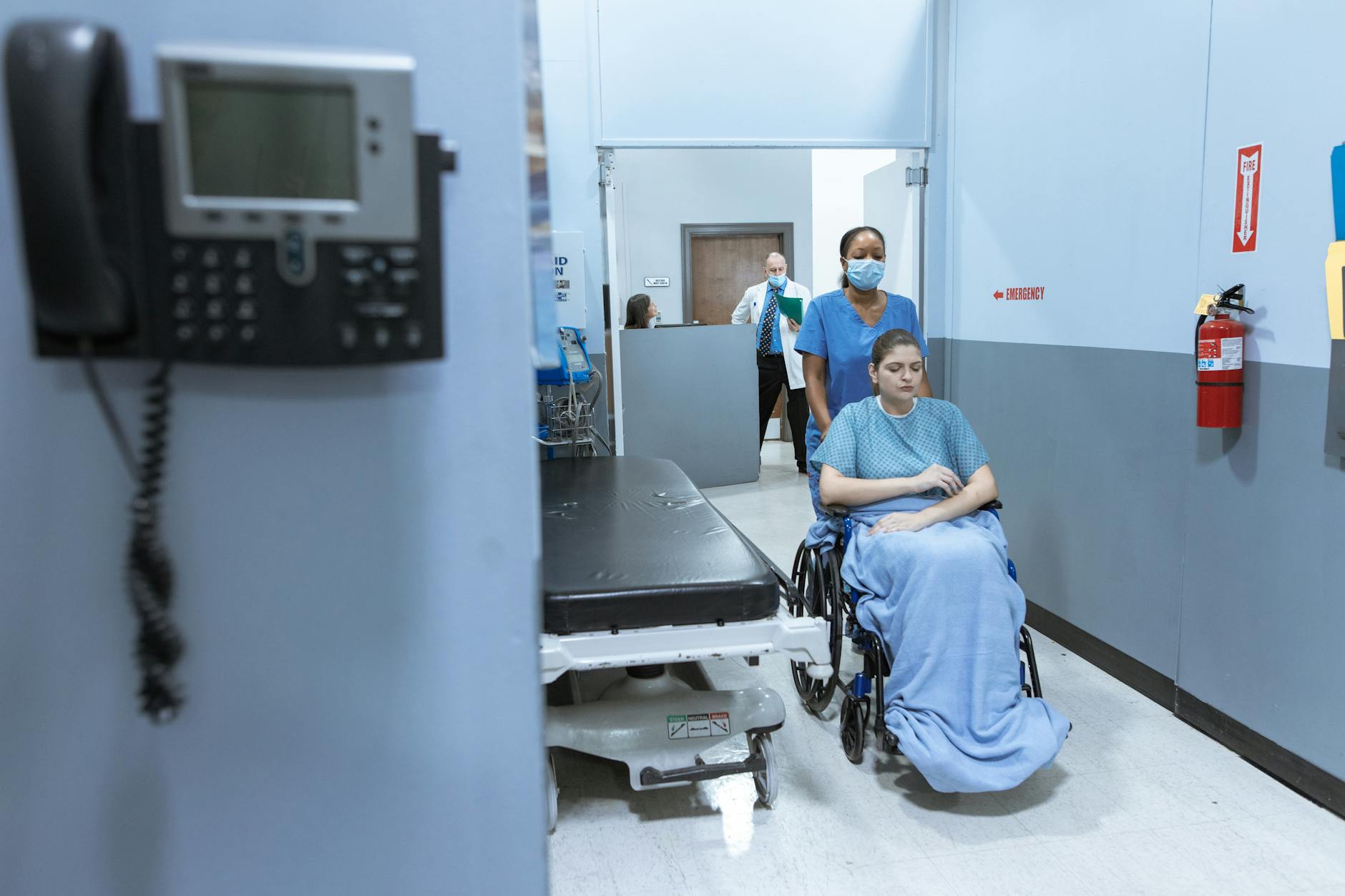
Rural healthcare infrastructure operates on margins that urban systems do not. A rural hospital serving a county of 15,000 people may have Medicaid patients representing a third or more of its inpatient volume. When Medicaid enrollment drops, those hospitals do not simply lose revenue proportionally – they lose it in ways that threaten the fixed costs that keep the facility open at all. Staff still need to be paid. Equipment still needs maintenance. The emergency department still has to stay open under federal law regardless of payer mix.
Rural hospital closures have been accelerating for years, and Medicaid policy is one driver among several. But the communities that depend most on Medicaid coverage are frequently the same communities where the local hospital is the largest employer, where specialty care requires a multi-hour drive, and where losing the hospital does not just mean inconvenience – it means that a cardiac event or a complicated delivery becomes a life-or-death logistics problem. Work requirements that reduce Medicaid enrollment in these areas do not exist in a policy vacuum. They interact with an already fragile infrastructure in ways that compound risk.
State Budgets Caught Between Federal Savings and Local Costs
The federal government covers the majority of Medicaid costs – anywhere from 50 to 90 percent depending on a state’s per capita income, with poorer states receiving higher federal matches. When a person loses Medicaid coverage due to a work requirement, the federal government saves its share of that person’s costs. The state also saves its share. But then something else happens: that person’s unmet healthcare needs do not disappear. They show up in emergency departments, in county health departments, in crisis stabilization units, in correctional healthcare systems. Many of those costs land back on the state through different budget lines that do not get counted against the Medicaid savings calculation.
This is the core fiscal paradox that work requirement proponents rarely address directly. A state can report Medicaid enrollment savings while simultaneously watching its corrections health budget, its mental health system, and its hospital disproportionate share payments climb. The savings are visible and politically legible. The offsetting costs are diffuse, delayed, and distributed across agencies that do not typically appear in the same budget conversation as Medicaid reform.
States with large rural populations face an additional wrinkle: the labor markets in those areas often cannot absorb the kind of work activity that satisfies typical requirement thresholds. A person in a rural county with limited transportation and no nearby employer may be genuinely willing to work and still unable to meet a 20-hour-per-week documented employment threshold. Exemptions for geographic labor market hardship exist in some proposals, but administering those exemptions requires exactly the kind of caseworker capacity that rural state agencies typically lack. The gap between the policy design and the operational reality of enforcing it in low-density, low-income regions is wide.

What is becoming clearer as more states move toward implementation under renewed federal interest in the policy is that the fiscal case for work requirements depends heavily on what you count and over what time horizon. If the metric is 12-month Medicaid enrollment and federal match savings, the numbers can look favorable in the short term. If the metric includes downstream costs, hospital closure risk, increased uncompensated care, and the administrative burden of running a compliance system that must process documentation for millions of enrollees, the math shifts considerably. States that have been through the cycle once are more cautious this time – not because the politics have changed, but because the operational reality proved far messier than the budget projections suggested it would be.