





When a Raise Costs You Your Groceries
SNAP – the Supplemental Nutrition Assistance Program – is built on a simple promise: help low-income households afford food. But the way benefit thresholds and phase-out rules interact with inflation means that a modest wage increase can trigger a benefit reduction far larger than the raise itself. That gap between earned income gains and lost food assistance is what policy researchers call a benefit cliff, and in an environment where grocery prices have climbed faster than SNAP eligibility adjustments, those cliffs are getting steeper.
The mechanics are worth understanding. SNAP benefits are calculated based on net income after deductions, and eligibility cuts off at 130% of the federal poverty level for most households. When that poverty line moves slowly relative to actual food costs, households near the threshold face an increasingly harsh trade-off: earn more and lose assistance that, in practice, was covering more ground than it used to. The problem is not new, but the current inflation environment has made it more acute than at any point in recent memory.
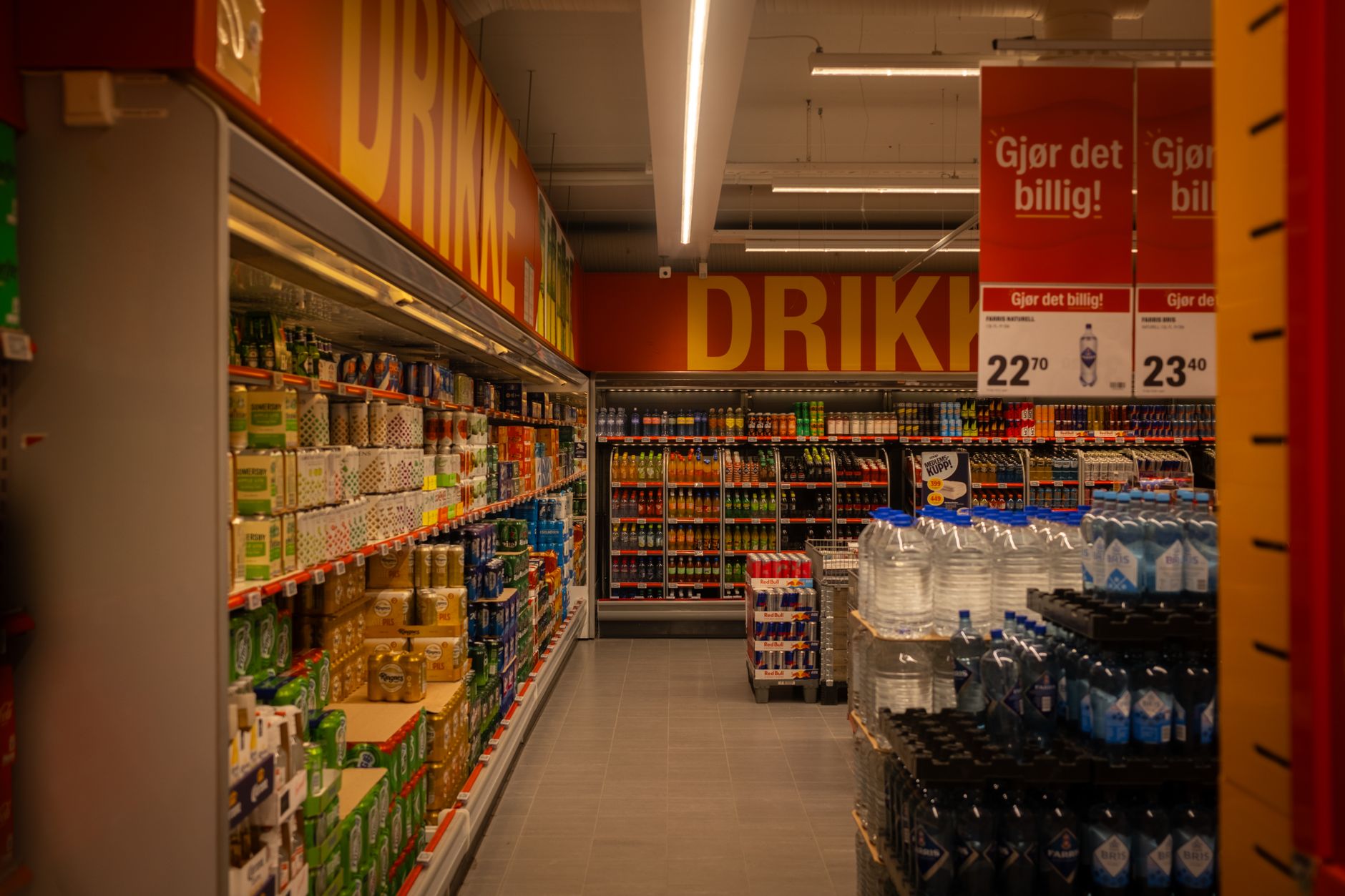
The Inflation Mismatch Nobody Is Fixing
The federal poverty level is updated annually using the Consumer Price Index for All Urban Consumers, a broad inflation measure that tends to underweight food and housing costs relative to what low-income families actually spend. Grocery inflation since 2020 has been particularly uneven – staples like eggs, cooking oils, and proteins saw price spikes well above headline CPI, while the categories that moderate the overall index, like electronics and apparel, are things most food-insecure households are not buying. The result is a poverty line that technically adjusts for inflation but misses the specific inflation burdening the people SNAP is designed to serve.
SNAP’s maximum benefit amount – the most a household can receive – is updated annually based on USDA’s Thrifty Food Plan, which itself was revised upward in 2021 for the first time in decades. That revision was a genuine improvement. But the eligibility thresholds that determine who qualifies, and how quickly benefits phase out as income rises, have not been reformed in any structural way. So the floor rose, but the walls did not move. Households earning just above the qualifying threshold get nothing while spending as much on groceries as households just below it.
The phase-out rate compounds this. For every additional dollar of net income a SNAP household earns beyond certain points, benefits drop by 30 cents. On paper that sounds gradual. In practice, when you layer in loss of other income-linked benefits – Medicaid, utility assistance, childcare subsidies – a household that earns $200 more per month can easily find itself $400 or $500 worse off in total support. SNAP is rarely the only thing that phases out simultaneously, which means the cliff is not a single program’s design flaw. It is an architectural problem across the safety net.
States have some flexibility here, particularly through broad-based categorical eligibility rules that can extend SNAP to households slightly above federal thresholds. But that flexibility has been subject to repeated federal challenge, and not every state uses it. In states with stricter eligibility rules, the cliffs are sharper and affect a larger share of working poor households – the exact population SNAP was redesigned in the early 2000s to better serve.

Who Gets Caught and How
The households most exposed to benefit cliffs are not the very poorest. Households with no income typically receive maximum benefits and face no immediate cliff. The cliff problem hits hardest for working families – those with one or two adults employed in low-wage jobs, where income fluctuates by season, hours, or tip earnings, and where a single promotion or shift change can push them past a threshold. Seasonal workers, gig workers, and hourly retail or food service employees cycle in and out of eligibility in ways that create administrative chaos even when the dollar amounts are not large.
Children in those households bear the most direct consequences. Food insecurity during childhood is associated with measurable effects on school performance, physical development, and long-term health outcomes – effects that carry economic costs far beyond the near-term cost of the benefit itself. This is not an abstraction. A household that loses $150 per month in SNAP benefits because a parent picked up an extra weekend shift did not gain $150 in food purchasing power. They likely gained less after taxes, transit costs, and childcare, while losing more in assistance.
What Structural Reform Would Look Like
Several policy proposals have circulated around this problem without gaining traction. One approach is a smoother phase-out curve – instead of an abrupt eligibility cutoff at 130% of the federal poverty level, benefits could taper more gradually, reducing the shock of crossing the threshold. This is how the Earned Income Tax Credit is structured: it phases in, plateaus, and phases out over a wide income range, which reduces but does not eliminate cliff effects. Applying similar logic to SNAP would require legislative action and, critically, increased program spending to cover the expanded eligibility range.
A second option is changing the inflation index used to update poverty thresholds. Switching to a measure that weights food and housing more heavily – something closer to how low-income households actually allocate spending – would move eligibility lines in closer alignment with real cost burdens. This would not solve the cliff problem structurally, but it would ensure the thresholds do not fall further behind in periods of uneven inflation. The Bureau of Labor Statistics already publishes experimental indices that do this kind of reweighting, though none have been formally adopted for program eligibility purposes.

The political difficulty with any of these reforms is cost. Broadening eligibility or smoothing phase-outs means more people receiving benefits for longer periods, which scores as an increase in mandatory spending. In a fiscal environment where SNAP has been a recurring target for budget cuts – and where proposals to convert it to a block grant format resurface regularly – the odds of Congress agreeing to expand the program’s reach, even modestly, are not favorable. The 2023 Farm Bill negotiations, which would have been a natural vehicle for SNAP reforms, extended without resolving that disagreement. The 2024 extension continued the stalemate. The current Farm Bill debate carries the same unresolved tension into another budget cycle, with low-income working families still absorbing the cost of the gap.