



Caught Between Policy and Payroll
When tariff rates shift by double digits in a matter of weeks, large corporations can absorb the shock through legal teams, hedging strategies, and supplier diversification built over decades. Small importers have none of that. They are running on thin margins, personal credit lines, and supplier relationships that took years to build – and the current cycle of tariff announcements, reversals, and re-escalations is hitting them at the exact moment when their exposure is greatest.
The whiplash is not metaphorical. Rates on goods from major manufacturing economies have moved dramatically within single quarters, leaving business owners who placed orders months ago now staring at landed costs that bear no resemblance to the price they quoted their retail customers. The gap between what they expected to pay and what customs now demands is, in many cases, the difference between a profitable quarter and a loss that cannot be recovered.
The Structural Disadvantage of Operating Small
A business importing $50 million worth of goods annually has options. It can renegotiate supplier contracts to shift some tariff burden upstream. It can absorb short-term losses and wait for policy clarity. It can shift sourcing to lower-tariff countries over a 12-to-18-month timeline. A business importing $500,000 annually has essentially none of those options on a practical timescale. The minimum order quantities required to qualify for alternative suppliers are often larger than their entire annual volume from a given category.
Customs brokers who work with small importers report that the volume of urgent calls asking about tariff classification, country-of-origin rules, and exemption eligibility has surged sharply in recent months. Many small business owners are learning the details of Harmonized Tariff Schedule codes for the first time, because misclassifying a product – even accidentally – carries retroactive penalty risk that could exceed the tariff itself.
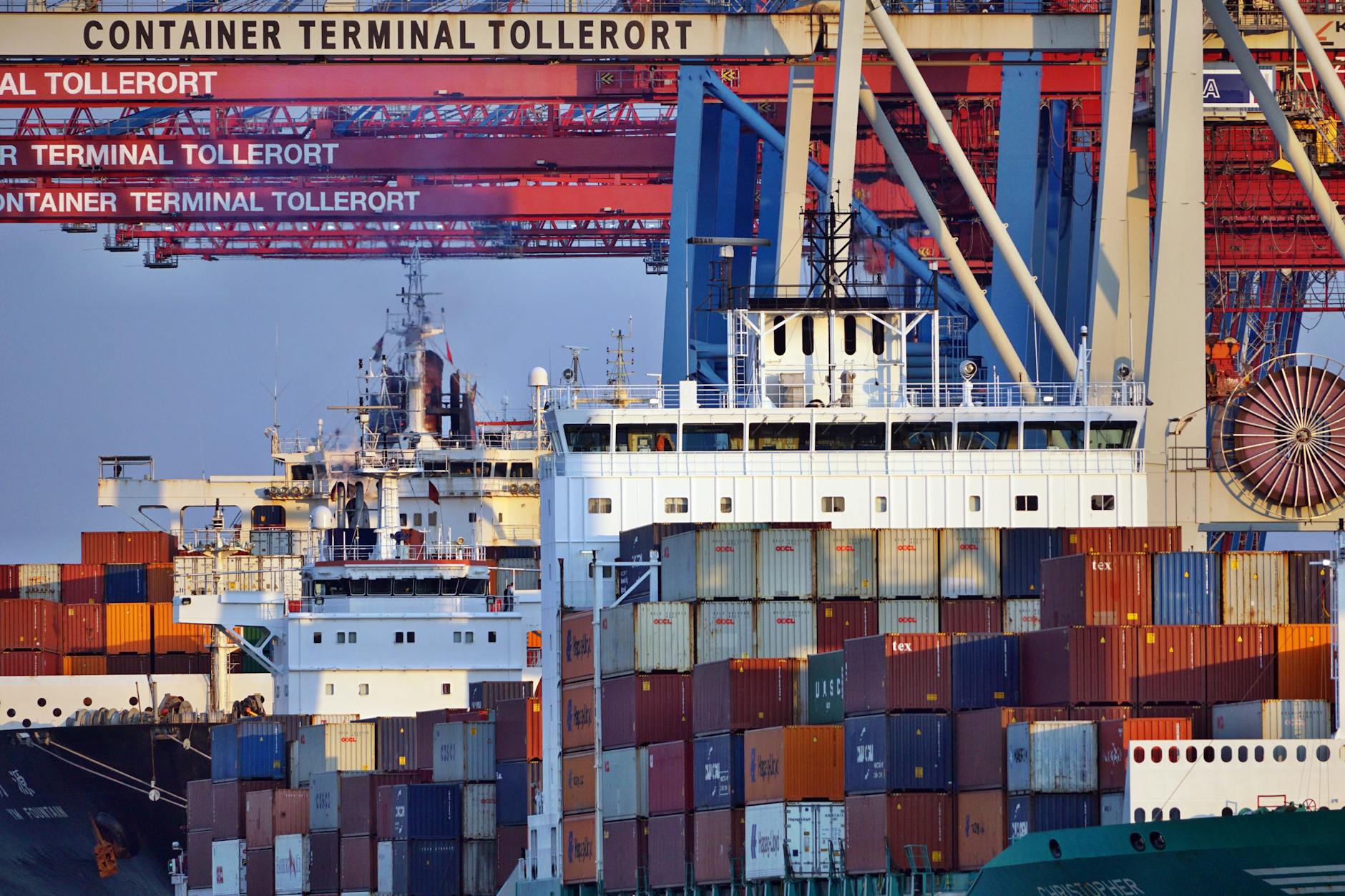
Cash flow timing makes everything worse. Tariffs are due at the point of entry, not at the point of sale. A small importer receiving a container of goods must pay the duty before those goods reach a shelf, before a single unit is sold, and sometimes before they have confirmed all their wholesale orders for the season. That front-loaded cost structure means working capital gets consumed faster, credit facilities get drawn earlier, and the buffer against a slow month essentially disappears.

What Passing the Cost Forward Actually Costs
The instinct to simply raise prices and pass tariff costs to customers is understandable but consistently overestimated as a solution. Retail buyers – particularly the regional chains and independent stores that small importers often supply – have their own margin pressure. When a small vendor raises wholesale prices mid-season, they risk losing shelf space to a competitor who locked in costs earlier or who sources from a country not yet caught in the tariff crossfire.
Passing costs forward also requires a conversation about price elasticity that most small business owners have never had to have formally. Some product categories tolerate price increases well. Others collapse in volume almost immediately when prices move even modestly, particularly in discretionary spending categories where consumers have abundant alternatives. A ceramics importer, a toy distributor, a small electronics reseller – each faces a fundamentally different demand curve, and none of them has the market research budget to model it cleanly.
The businesses that are managing best right now share a common characteristic: they placed large forward orders before rate increases took effect, or they hold enough inventory to buffer against the next few months of elevated costs while they renegotiate terms. That sounds like good planning, but in many cases it was luck – they happened to reorder at the right time, or their product cycle aligned with the window before rates moved. The businesses that reordered two months later are in a structurally different position through no fault of their own operational decisions.
There is also a competitive distortion building quietly in the background. Larger importers with dedicated trade compliance staff are finding tariff engineering strategies – adjusting product specifications, adjusting supply chain routing, using bonded warehouses or foreign trade zones to defer or reduce duty exposure. These are legal approaches, but they require legal expertise and minimum volume thresholds that simply are not accessible to small operators. The result is that scale confers a tariff advantage on top of every other advantage large businesses already hold. Small businesses dealing with margin compression from rising input costs are already operating in a difficult environment, and tariff volatility is stacking pressure onto pressure.
The deeper problem is that small importers cannot hedge against policy uncertainty the way financial instruments allow currency or commodity hedging. There is no futures market for tariff rates. There is no insurance product that pays out when a trade policy shifts after an order is placed. A business owner who signed a purchase order in January based on a specific duty rate had no mechanism to protect themselves if that rate changed in March. They simply carry the loss – or they don’t survive it.
What happens to those businesses over the next 12 to 24 months is largely a function of how long the current period of policy volatility continues. A business can survive one bad quarter by drawing on reserves or taking a short-term loan. It cannot survive four consecutive bad quarters without either a fundamental restructuring or an exit. For some small importers, the question is no longer whether costs have risen – it is whether their customers will still be buying from them by the time the next rate cycle lands.
Frequently Asked Questions
Why are small importers more vulnerable to tariff changes than large companies?
Small importers lack the volume to renegotiate supplier contracts, the capital to absorb sudden cost increases, and the legal expertise to use tariff engineering strategies available to larger businesses.
Can small importers simply raise prices to cover tariff costs?
Raising prices is possible but risky – retail buyers may switch suppliers, and demand in many product categories drops quickly when prices increase, potentially costing more in lost volume than the tariff saves.