





A Housing Crisis Built on Empty Job Sites
Affordable housing development across the United States is running into a wall that no policy fix or funding package has fully addressed: there are not enough skilled construction workers to build it. Projects approved, financed, and permitted are sitting in various stages of incompletion, with developers watching carrying costs climb while crews remain unavailable or prohibitively expensive. The gap between housing demand and housing supply is not just a planning problem anymore – it is a labor problem.
The shortage is not new, but its bite has sharpened considerably over the past two years as affordable housing programs received increased federal attention and funding. More money flowed in, more projects broke ground, and the construction labor market – already strained – buckled under the additional pressure. What looked like progress on paper has translated, on the ground, into delayed timelines, cost overruns, and in some cases, stalled sites waiting months for a qualified framing or electrical crew.
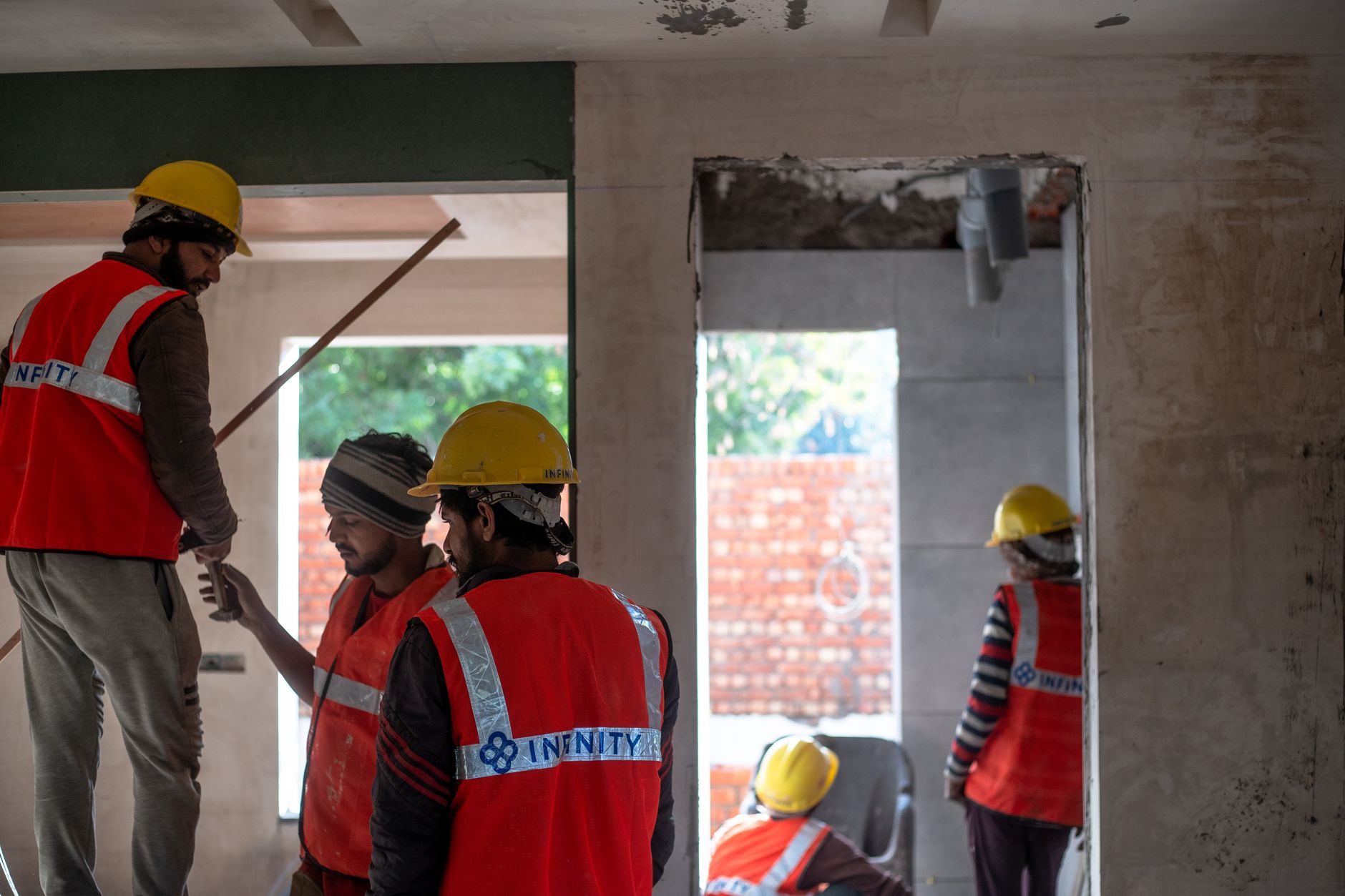
Where the Workers Went
The construction labor shortage did not appear overnight. The 2008 financial crisis gutted the residential construction workforce, and many experienced tradespeople never returned. Those who left for other industries took their skills with them, and the pipeline of new entrants into skilled trades never fully recovered. Vocational training fell out of fashion during a decade-long push toward four-year college degrees, leaving a structural deficit in electricians, plumbers, carpenters, and ironworkers that was always going to catch up with the industry.
The problem is compounded by demographics. A significant portion of the existing skilled trades workforce is aging toward retirement, and the workers replacing them are fewer in number and, on average, less experienced. That experience gap matters: a journeyman electrician who has wired fifty residential buildings works faster and makes fewer errors than someone three years into the trade. On affordable housing projects, where margins are thin and schedules are rigid – often tied to tax credit deadlines or financing covenants – slower work has direct financial consequences.
Immigration policy has added another layer of friction. Historically, immigrant workers have filled critical roles in residential construction, particularly in framing and finishing trades. Tighter enforcement and shifting visa pathways have reduced that labor supply in several regions, most acutely in the Southwest and Southeast where affordable housing demand is highest. Developers in those markets describe waiting months for crews that once would have been available within weeks.

The Cost of Waiting
Delays on affordable housing projects are not merely inconvenient – they are financially corrosive in ways that market-rate development can absorb more easily. Affordable housing is typically financed through a complex stack that includes Low-Income Housing Tax Credits, local subsidies, and gap financing, all of which carry deadlines and conditions. When a project misses a placed-in-service date tied to its tax credit allocation, developers can face recapture of credits already claimed or forfeit future tranches entirely. That kind of financial disruption can unwind projects that took years to assemble.
Labor scarcity also drives up wage costs, and those costs flow directly into per-unit development budgets that were already built with minimal cushion. When a general contractor has to pull workers from a competing project or pay overtime to keep a schedule intact, affordable housing – which offers lower profit margins than luxury or commercial construction – often loses that bidding war. Some developers describe affordable projects being deprioritized by subcontractors who can earn more working on market-rate multifamily or commercial builds in the same city. The affordable housing sector is, in effect, competing for labor in a market that does not price its social value.
Regional Fault Lines
The labor shortage is not evenly distributed, and neither is its impact on affordable housing. Sun Belt metros – Phoenix, Atlanta, Dallas, Charlotte – are experiencing some of the sharpest pressure, where population growth has pushed both housing demand and construction activity to high levels simultaneously. In those markets, a single large commercial or industrial project can absorb enough skilled workers to meaningfully thin out the labor pool available for residential work. Affordable housing projects, which often take longer to close financing and break ground, are left competing for what remains.
In the Northeast and Midwest, the dynamic is different but no less painful. Older industrial cities with significant affordable housing need – Detroit, Cleveland, Baltimore – often struggle to attract construction workers at all. Smaller local contractor bases, colder weather windows, and years of depressed construction activity have left trade apprenticeship programs underfunded and local workforces thin. When a new affordable development does get financed in those markets, the available pool of contractors willing to bid the job at a workable price is often limited to two or three firms, reducing competitive pressure and limiting the developer’s ability to negotiate.
Rural areas face a version of this problem with a different texture. There, the issue is not competition from commercial construction but simple absence: not enough workers live within a reasonable commute of a rural affordable housing site to staff it adequately. Bringing in crews from distant markets means paying per diem and travel costs that were not factored into original project budgets. Some rural affordable housing projects are now structuring mobilization costs as a line item from the start – an acknowledgment that local labor supply cannot be assumed.
The construction debt burden that labor shortages create also carries longer-term implications for lenders. Hotel construction projects have already shown how stalled timelines translate into accumulating debt against assets that are not yet generating revenue – a dynamic now playing out in affordable housing with the added wrinkle that the revenue ceiling, once the project is complete, is set by regulatory rent restrictions rather than market conditions. That combination – higher construction costs, longer timelines, capped returns – is beginning to deter some developers from taking on new affordable projects altogether.

Several states have started experimenting with workforce development programs tied directly to affordable housing production, offering apprenticeship subsidies or community benefit agreements that route local hiring into affordable projects. The results so far are mixed: programs take time to produce workers, and the immediate labor gap cannot be solved by training people who will not be journey-level for another three to four years. Modular and panelized construction methods are getting renewed attention as partial workarounds – factory-built components require fewer on-site labor hours and can be assembled with smaller crews – but adoption remains limited by financing barriers, code questions in some jurisdictions, and developer unfamiliarity with the process. Whether any of these approaches can move fast enough to matter for projects already in the pipeline is the question that affordable housing developers are sitting with right now, without a clear answer.