





When the Contracts Dry Up
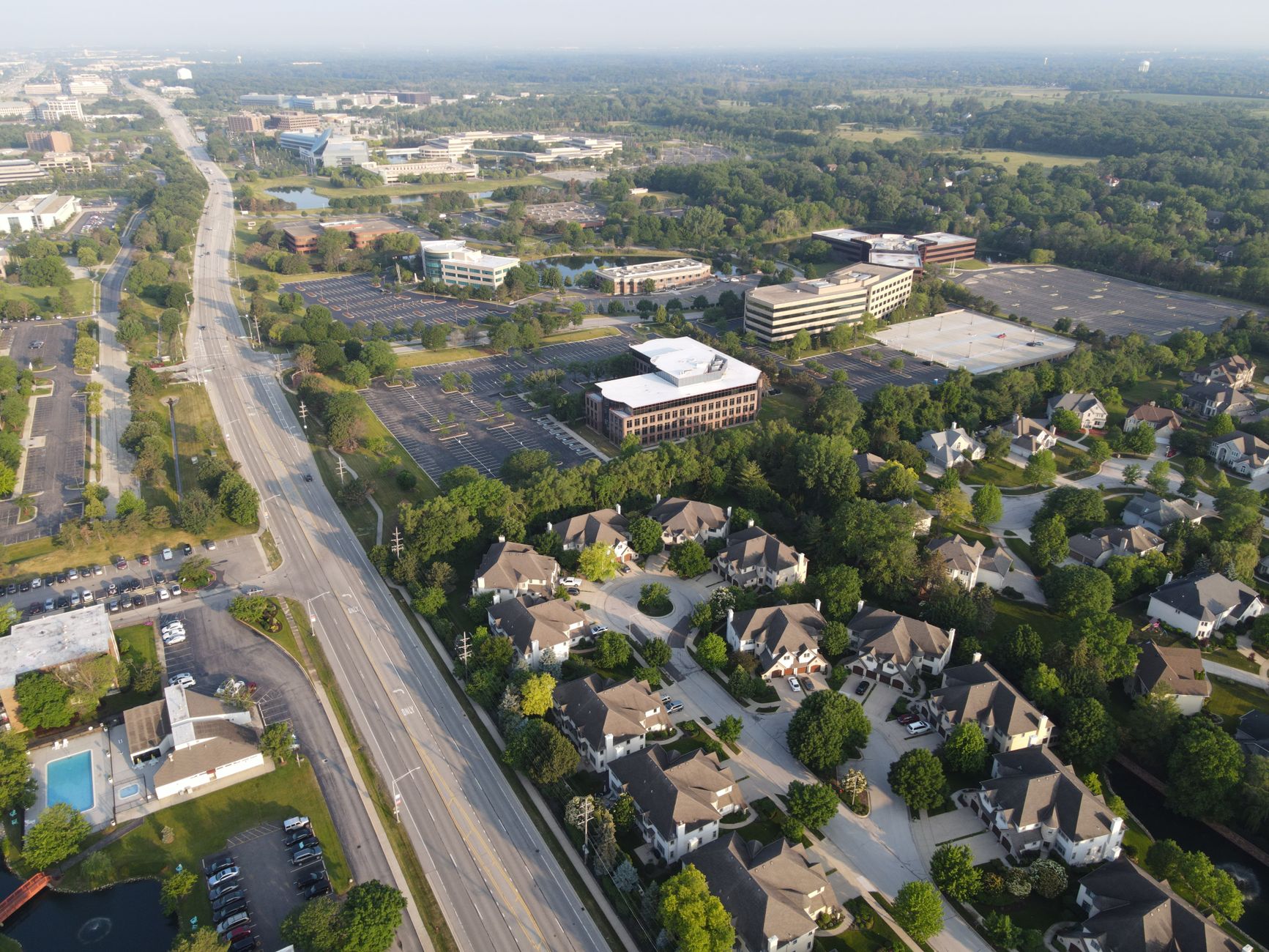
Federal contracting has long been the invisible backbone of suburban communities ringing Washington, D.C. – towns in northern Virginia, suburban Maryland, and even parts of West Virginia and Pennsylvania where defense firms, IT consultancies, and logistics operators set up sprawling office parks. These are not glamorous industries. They run quietly, employ large numbers of mid-career professionals, and generate enough local tax revenue to keep school districts funded and strip malls occupied. When that work disappears, the damage does not announce itself all at once.
A wave of federal workforce reductions and contract cancellations over recent months has begun pushing those effects outward. The immediate story has been told through D.C. proper – the empty coffee shops near federal buildings, the parking garages losing monthly accounts. But the second-order impact is landing harder in places like Fairfax County, Virginia; Montgomery County, Maryland; and the outer ring of exurbs that grew up around the assumption of steady government-adjacent employment.
The suburbs absorb the shock quietly, until they don’t.
Who Actually Lives in These Economies
The federal contractor workforce skews toward mid-level professionals – project managers, systems analysts, cleared security personnel, network administrators. Many of them purchased homes in the $500,000 to $900,000 range during the last decade, stretching budgets on the premise that government-backed contracts meant stable income. That calculation is now under pressure. Unlike direct federal employees, contractors have no civil service protections, no formal recall rights, and limited access to the kind of severance that cushions longer transitions. When a contract ends, the paycheck ends with it, often within weeks.
Local businesses that built themselves around this population are already registering the change. Dry cleaners, gym memberships, child care centers, and sit-down lunch spots near office parks are seeing weekday traffic thin out in ways that matter for thin-margin businesses. A child care provider losing even a handful of full-time slots can tip from barely profitable to actively losing money. These businesses rarely close with fanfare – they reduce hours, freeze hiring, or quietly fold after a few months of shortfalls.
The ripple moves further when homeowners begin making different decisions. A family facing an income shock in a $700,000 house does not immediately list the property – they cancel the kitchen renovation, pull the kid from private school, stop eating out on Thursdays. That behavioral contraction does not show up in unemployment data for months, sometimes never. It shows up in quarterly earnings calls for regional restaurant chains, in lower local sales tax receipts, and in school district budget shortfalls the following fiscal year.

The Tax Base Problem Nobody Wants to Discuss
Fairfax County alone collects a substantial share of its operating revenue from property and local income taxes paid by residents who work in the federal contracting ecosystem. The same is true across Montgomery County and in smaller jurisdictions like Loudoun and Prince William counties in Virginia. These governments have largely been insulated from the boom-and-bust cycles that hit manufacturing-dependent communities because federal spending seemed structurally immune to political disruption. That assumption is being stress-tested right now.
County budget offices operate on multi-year projections. When a significant employer base contracts – even gradually – those projections become unreliable. School construction bonds, infrastructure maintenance schedules, and public employee pension commitments are all built on revenue forecasts that assumed continued growth or at least stability. Revising them downward requires politically difficult decisions: hiring freezes for teachers, deferred road maintenance, cuts to library hours and parks programming. None of these are dramatic line items on their own, but together they signal a community pulling back.
There is also a longer-term commercial real estate problem taking shape. Office parks built for defense and IT contractors are not easily repurposed. They require specific security infrastructure, large floor plates, and parking ratios calibrated for suburban commuters. When those tenants leave or shrink, landlords face extended vacancies and conversion costs that most regional developers are not set up to absorb. Retail and residential development that followed those office parks – the chain restaurants, the apartment complexes, the urgent care centers – faces a demand shortfall it was not designed to handle.
What the Recovery Path Actually Looks Like
Economic development officials in these counties are already pivoting toward talking points about diversification – attracting tech firms, healthcare employers, and logistics companies that are not dependent on federal spending. That is a reasonable long-term strategy that takes five to ten years to show meaningful results. It does not help the cleared systems engineer whose contract ended in March, or the small business owner whose lunch crowd consisted primarily of people who used to work in the building across the parking lot.
Retraining programs exist but face the same structural problem they always face: the people who need them most are often the least positioned to use them. A 52-year-old program manager with a mortgage and two kids in high school cannot easily absorb 18 months of reduced income to retrain for a new field. The cleared workforce in particular has credentials that are highly specific to government contracting – a Top Secret/SCI clearance is valuable inside that ecosystem and nearly irrelevant outside it. Pivoting to the private sector means taking a pay cut, accepting a skills gap, and starting over in ways that are not financially survivable for many families.

The suburbs around Washington have not historically shown up in national conversations about economic distress – they have been too affluent, too educated, and too close to the federal spending spigot to register as vulnerable. That framing is becoming harder to maintain. The communities most exposed are not the inner city neighborhoods that policy attention usually gravitates toward, but the mid-tier suburbs that built their entire tax base, school system, and commercial infrastructure around the assumption that Washington would always be spending. What happens to a $750,000 house in a school district that can no longer afford to hire science teachers?
Frequently Asked Questions
How do federal contractor layoffs affect suburban communities differently than D.C. itself?
Suburbs like Fairfax and Montgomery counties rely on contractor employees for property tax revenue and local spending. When contracts end, the fiscal and commercial damage hits those communities with a delay but at significant scale.
Do laid-off federal contractors qualify for unemployment benefits?
Yes, but contractor unemployment benefits are typically less generous than those available to direct federal employees, and contractors have no civil service recall rights or formal severance protections when a contract is terminated.