





Spot freight rates on major shipping lanes have swung so violently over the past eighteen months that many importers no longer trust their own cost forecasts. The volatility is not a blip – it is becoming the operating condition, and it is forcing procurement teams to rethink how they buy ocean capacity.
A Market That Won’t Hold Still
Transpacific rates collapsed through much of 2023 after the pandemic-era shipping boom unwound, bottoming out at levels that left carriers scrambling to idle vessels and manage overcapacity. Then, starting late in 2023 and accelerating into 2024, Red Sea diversions rerouted enormous volumes around the Cape of Good Hope, adding days to transit times and effectively tightening supply almost overnight. Spot rates surged again, in some cases tripling within a matter of weeks. Importers who had locked in low annual contracts suddenly found carriers prioritizing spot cargo, while those who had stayed on spot markets watched their landed costs blow out.
The whipsaw effect is particularly brutal because the two extremes hit different types of buyers. Large-volume importers with multi-year contracts can negotiate floor-and-ceiling rate structures, but mid-sized companies – the kind moving a few hundred containers a month – tend to operate on short-term agreements or pure spot. When rates spike, those buyers absorb the full force of the move with almost no lead time to adjust retail prices or renegotiate with suppliers.
Carriers have not been innocent bystanders in this dynamic. Blank sailings – scheduled departures that are quietly cancelled to prop up rates – became a routine tool during the soft market of 2023, and there is little structural reason they would not be deployed again if rates soften sharply. The result is an artificial floor under pricing that makes it harder for importers to plan around what should, in theory, be a period of lower costs.
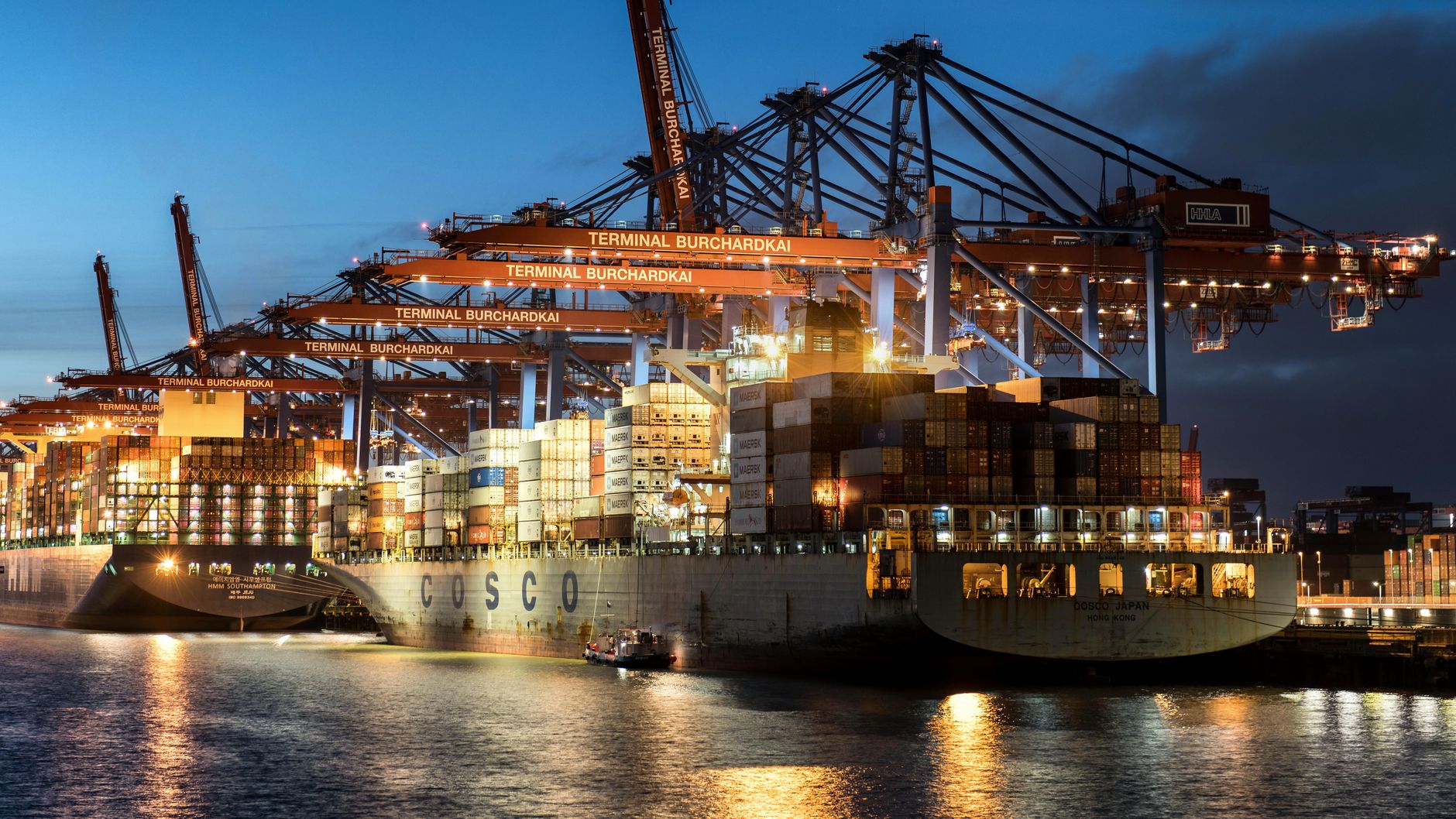
Port congestion compounds the problem. Even when rates are nominally stable, congestion at major gateway ports like Los Angeles, Rotterdam, and Singapore introduces unpredictable detention and demurrage charges that can erase the savings from a favorable rate. Importers are learning that the headline freight rate is only part of the true landed cost equation, and that the gap between the two can widen or narrow based on factors entirely outside their control.
The Rush Toward Contract Cover
Contract freight agreements – fixed-rate commitments typically covering six or twelve months – have historically been viewed as a tool for large shippers who could guarantee volume. What is changing now is that mid-sized importers are actively seeking contract cover even when it costs more than spot rates at the moment of signing. The logic is straightforward: a slightly higher fixed rate is worth paying if it eliminates the risk of a tripling in costs during peak season.

Freight forwarders report growing demand for hybrid structures that blend a base contracted volume with a spot option for overflow. Under these arrangements, an importer commits to moving, say, eighty percent of their expected volume at a fixed rate and reserves the right to book additional capacity at spot. This gives carriers the volume certainty they want while giving importers a buffer against demand swings on their end. The structure is not new, but its popularity is growing precisely because pure spot exposure has proven so punishing.
Some importers are going further, exploring multi-carrier contracting rather than relying on a single shipping line. Spreading volume across two or three carriers reduces the risk that any single carrier’s blank sailing program or vessel redeployment decision leaves a shipper without capacity. The tradeoff is administrative complexity – managing multiple service contracts, rate tariffs, and booking systems – but for companies where freight costs represent a meaningful share of cost of goods sold, that complexity is worth the operational overhead.
The tariff environment adds another layer to the calculation. Companies already navigating tariff-driven sourcing decisions and their collision with weak domestic demand now have to price in freight volatility on top of import duty uncertainty. When both variables move simultaneously and in the same direction, margin compression can happen faster than any quarterly pricing review cycle can respond to. Contract cover on freight at least removes one of the moving parts.
Long-term service agreements with freight forwarders – rather than directly with carriers – are also gaining traction. A forwarder with guaranteed allocation across multiple shipping lines can act as a buffer, absorbing some of the capacity risk and redistributing it across their client book. The cost is a margin paid to the forwarder, but for importers without the negotiating scale to secure direct contracts with tier-one carriers, it may be the most practical path to rate stability. The forwarder model essentially rents the scale of a larger buyer to a smaller one.
None of these strategies eliminate risk entirely. A twelve-month contract signed in a high-rate environment becomes painful if rates crater six months later – an importer locked into above-market rates while competitors buy spot at a discount loses on landed cost even when their supply chain is technically “secure.” The decision to contract is always a bet on the direction of rates, and getting that directional call wrong has real consequences.
What Procurement Teams Are Actually Doing
Across the import community, the practical response has been to shorten planning horizons while simultaneously trying to lock in capacity earlier. That sounds contradictory, but the operational logic holds: importers are signing shorter contracts – quarterly rather than annual in some cases – at higher per-unit rates, accepting the premium as the cost of not being stranded without space. They are also booking further in advance, accepting longer lead times in their supply chains to reduce dependence on last-minute spot capacity, which is where the most brutal rate spikes tend to land.

Inventory strategy is quietly shifting alongside freight strategy. Holding more safety stock buffers against both rate spikes and service disruptions, but it ties up working capital and requires warehouse space that has itself become expensive in many markets. The companies navigating this best tend to be those with enough financial flexibility to carry higher inventory without straining liquidity – which is another way of saying that freight volatility is, at its core, a balance sheet problem as much as a logistics one. Smaller importers with tighter credit lines are running out of runway to absorb both the cost and the capital implications at once.
Frequently Asked Questions
Why are freight rates so volatile right now?
A combination of Red Sea shipping diversions, carrier blank sailing programs, and port congestion has created sharp swings in available capacity and pricing across major trade lanes.
What is a hybrid freight contract structure?
A hybrid structure blends a fixed-rate contracted volume with a spot option for overflow, giving importers cost certainty on core volume while retaining flexibility for demand surges.