



The Store Brand Takeover Is Already Underway
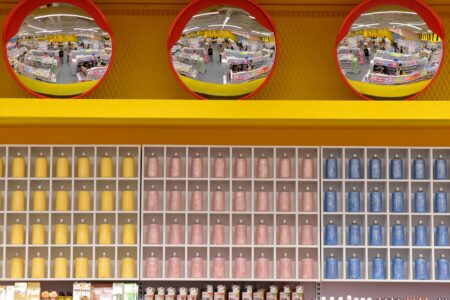
Walk down any major grocery aisle today and the math is hard to ignore: store brands now occupy more physical shelf space than at any point in the modern supermarket era. Retailers from Kroger to Costco to Aldi have spent the last several years quietly, methodically pushing national name brands toward the margins – literally – while their own private label products take over premium eye-level placement. The shift is not subtle anymore.
Grocers have always stocked their own house brands, but the current moment is different in scale and strategy. Chains are no longer content to offer a cheap alternative sitting below the “real” product. They are designing private label lines with premium packaging, distinct branding, and tiered product ranges that compete directly at the top of the category – not just the bottom. Kroger’s Simple Truth line alone reportedly generates billions in annual revenue, a figure that would make it a significant standalone food company if it were spun out independently.
Consumers, squeezed by years of elevated grocery prices, made the initial switch – and then stayed.
Why Retailers Are Winning the Shelf War Now
The economics of private label have always favored the retailer, but the current pricing environment made those advantages visible to shoppers in a way that advertising budgets alone could not reverse. When a name-brand box of cereal sits at $6.49 and the store equivalent is $3.99 with nearly identical nutrition facts, the decision becomes a logic problem rather than a brand loyalty test. National brands built their moats on consistency and trust over decades, but price gaps of 30 to 50 percent across staple categories have proven difficult to defend.
Retailers have also gotten sharper about how they manage the physical shelf. Category management – the practice of deciding which products get space, at what height, and in what quantity – is controlled by the retailer, not the brand. Name brands used to offset that power by paying slotting fees and funding promotional displays. That leverage has weakened as chains grow more confident in their own product lines and more willing to deprioritize brands that don’t meet internal margin thresholds. A national brand that won’t negotiate on pricing or promotional spend is increasingly likely to find its facings reduced at the next reset cycle.
Private label margins are significantly higher for the retailer. When a grocery chain sells a name brand product, it earns a wholesale margin – typically thin and contested. When it sells its own brand, it captures the full spread between production cost and retail price, with no middleman and no co-op advertising obligation. That difference flows directly to the bottom line, which gives store leadership a strong financial incentive to keep expanding private label penetration beyond what any single quarter’s consumer trend would justify.
What This Costs National Brands – and What They’re Doing About It
Major consumer packaged goods companies are not watching passively. Several large CPG players have publicly acknowledged private label pressure in recent earnings calls, framing it as a cyclical challenge tied to consumer affordability concerns. The argument is that when household budgets recover, brand loyalty returns. That thesis has some historical support – private label share did pull back after prior economic stress periods – but the current wave is different because retailers have invested heavily in product quality, not just price. Shoppers are not switching down. They are switching sideways.
Some national brands are responding by doubling down on product innovation, betting that proprietary formulas, licensed flavors, and celebrity-adjacent product lines can re-establish the quality gap that private label is steadily closing. Others are leaning harder into loyalty programs and digital coupons to make the price gap feel smaller at the point of purchase. Neither approach has proven decisive. The brands that have lost shelf space at major chains due to pricing disputes – a dynamic that has played out publicly between several large retailers and CPG giants over the past two years – often find it difficult to recover those positions quickly, even after resolving the dispute.
There is a harder structural problem underneath the tactical skirmishes: many private label lines have now built their own consumer recognition. Shoppers are not just buying the store brand because it is cheaper. Some are buying it because they actually prefer it, or because they have stopped thinking of it as a compromise. That psychological shift, once it takes root across a broad enough customer base, is far more difficult for national brands to address than a price gap. You can close a price gap with a coupon. You cannot run a promotion to make someone feel like they are missing out on something they already feel satisfied by.
The pressure lands differently across categories. Fresh and perishable departments – produce, meat, dairy – have long been dominated by private label because branding matters less when shoppers are evaluating physical quality directly. The more recent gains are happening in processed foods, snacks, beverages, and even personal care, categories where brand identity used to carry significantly more weight. As grocery delivery has grown, private label has benefited further – online shopping removes the in-store visual cues and brand familiarity that national brands spent generations building into the physical retail environment.
The Endgame Nobody Is Quite Ready to Name
If private label continues at its current trajectory, the grocery store of five years from now looks meaningfully different from what shoppers know today – not in layout or technology, but in whose name is printed on the majority of products leaving in shopping carts. The brands that survive will likely be the ones with genuine product differentiation or cultural status strong enough to justify the price premium in categories where shoppers still feel the difference matters. For the ones that can’t make that case clearly, the shelf space is already being measured for what comes next.